In one sentence
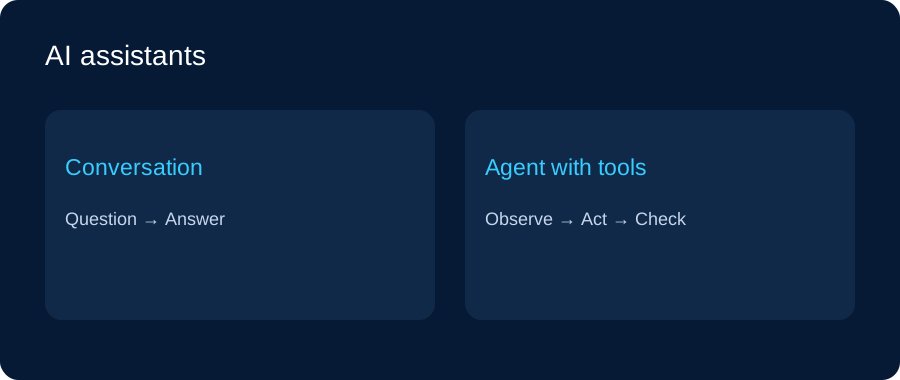
A conversational assistant (ChatGPT, Claude, Copilot…) answers and suggests; you apply. An agent is given access (files, commands) and carries out part of the work itself.
A comparison
The assistant is like an adviser on the phone: they tell you what to do, and you do it. The agent is like a technician you hand the workshop keys to: they do the job, then show you what they changed.
Claude Code and Codex
Claude Code (Anthropic) and Codex (OpenAI) are agents for software development. In a project, they can read files, edit code, and run commands and tests. What they are allowed to do depends on the permissions you grant.
Example: the contact form no longer works
- With an assistant: you paste the code and the error message into the conversation. It explains the cause and suggests a fix. You copy it into the right file, then test.
- With an agent: you describe the problem. It finds the files involved, fixes them, runs the tests and presents the changes for you to approve.
The boundary keeps moving
Assistants are gaining tools (web search, reading documents), and an agent can also simply answer. The useful question is: what is the AI allowed to do on my behalf?
Which one to choose?
- Understanding, writing, preparing: a conversation is enough.
- Changing an existing project: an agent saves you copying and pasting.
- In both cases: describe the expected result precisely and review the work. A passing test does not prove there are no errors.
Official sources: Claude Code and Codex CLI · Accessed 26 September 2026.